


As we sail towards high season, a curious trend has begun to influence travellers’ cruising habits. While shipyards are busy putting hammer to nail on the next generation of megaships, demand for more intimate sailing experiences is skyrocketing, thanks to a cohort of boutique operators determined to prove that bigger isn’t always better.
The benefits of small-ship cruising are hard to argue with. These vessels can glide down narrow canals, drop anchor metres away from soaring glaciers and sail into the heart of major cities that are simply out of reach for today’s maritime giants.
The onboard experience is just as alluring, with inside cabins making way for spacious ocean-view suites, and high crew-to-guest ratios offering more personal, intuitive service.
Think of it like sailing on your own private yacht, but for a fraction of the cost. And now Britain’s holidaymakers are wising up.

According to research from marketeers Adido and luxury travel company Unforgettable Croatia, online searches for small-ship cruises – those taking no more than 300 guests – have increased by 71 per cent in the past two years.
Perhaps we shouldn’t be surprised. While floating waterparks, Broadway-style productions and a vast array of dining options have undoubted appeal, scale isn’t everyone’s cup of tea. And that’s why more travellers are now seeking voyages that prioritise serenity over spectacle.
“The difference between large ships and small ships is the intimacy, the authenticity and the fact that you don’t have the queues you get on big ships,” says Simon Terry, captain of Windstar Cruises’ Star Legend. “It’s a homely, family environment.”
Access to smaller ports

A recent survey undertaken by World of Cruising’s sister title Cruise Trade News and the Daily Mail found that nearly half of regular cruisers are more interested in visiting off-the-beaten-track destinations than ports they’re familiar with.
Furthermore, 62 per cent of the regular sailors surveyed said they plan to visit somewhere new in 2026. While this trend has been evident since travel restarted after the pandemic, it is now changing the whole way we think about cruise.
Indeed, when asked to choose between sailing on a traditional ocean vessel or a smaller ship, over 65s voted overwhelmingly in favour of the latter.
“The main attraction for sailing with us is that we get into smaller ports,” says Helen Beck, Windstar Cruises’ commercial MD. “When sailing up the Adriatic coast, we call in at ports like Piran in Slovenia, or Zadar and Hvar in Croatia – places many people may never have heard of. These are the gems that guests remember most.”
Windstar Cruises’ fleet of all-suite, yacht-style ships visit roughly 330 ports across Europe, the Caribbean, Asia, and South and North America.

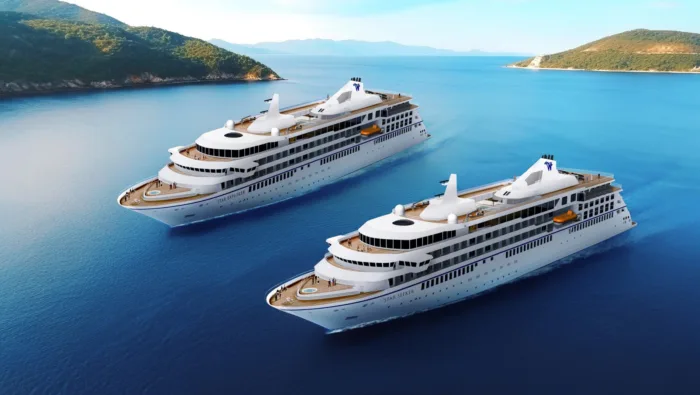
The line’s newest ship, Star Seeker, which launched in December, will be joined by Star Explorer at the end of the year, before a christening ceremony in London in 2027. Each with the capacity for just 224 guests, these glamorous debutantes join a fleet that’s tailor-made for immersive shoreside adventures.
“Take Alaska, for example,” adds Beck. “Even when we’re not in port, we can drop anchor and take the Zodiacs out to get up close to the glaciers. We can also sail right up the Chao Phraya River into the heart of Bangkok, negating the need for the three-hour transfer from the port.”
Seeing another side of the UK

While the ability to cruise narrow waterways and reach out-of-the-way ports is one of the biggest draws of small-ship cruising, it’s also a boon for domestic travellers, with the UK’s canals, rivers, highlands and islands now wide open for luxurious exploration.
“We often welcome well-travelled guests who have explored the wider world and are now looking for adventures closer to home – places they may not have visited before, or haven’t been to since childhood,” says Ken Charleson, managing director of Scottish specialist Hebridean Island Cruises.
“You don’t need to leave British waters to witness astonishing natural wonders, and that no-fly element is, for many, a welcome bonus.”
The line’s trio of ships, which carry up to 50 guests, are small enough to ferry passengers to wildly beautiful islands that those on larger vessels can only sail past. They can even venture up the Caledonian Canal, slicing through the Scottish Highlands to Inverness.

“Our Lord of the Highlands itinerary is particularly popular with customers who may previously only have considered European river cruises."
Charleson adds. “The calm, scenic transit of the Caledonian Canal is a great attraction for those less comfortable with open-sea conditions.”
Fortunately, booking a holiday at sea needn’t be an either/or decision.
One year, you can embark on an ocean cruise, revelling in the exhilaration of choice that only a megaship can offer.
But then, when you’re yearning for a remote island-hopping adventure or a relaxing mosey round the great cities of the Med, there’s a cruise for that too.
A more personal experience

Perhaps the strongest attraction of small-ship cruising is the unique feeling of exclusivity that comes with being one of a few dozen fellow guests, rather than sharing your holiday with a cast of thousands.
“It’s about making you feel special while on board, and when you have the numbers that we do, that’s easier than on the bigger ships,” concludes Windstar’s Simon Terry. “I believe that’s what makes small-ship cruising special. It’s the way the crew interact with the guests to deliver an authentic and exceptional service.”
Interview with Windstar Cruises captain Simon Terry
Q: What are the benefits of captaining a smaller ship?
A: The main advantage is the fact that there’s more of a homely feeling on board. You end up with a much smaller crew, which is ideal because that filters into the authenticity of our customer service. We have an open bridge policy, which means guests can pop in and have a chat with us – when it’s safe to do so, of course.
Q: What surprises guests most when they visit the bridge?
A: Even with the big ships, when people visit a bridge, it’s always, ‘Oh, I was expecting a bigger steering wheel.’ They’re expecting a large Pirates of the Caribbean-style wheel, the kind Jack Sparrow would use.
Q: Smaller ships allow you to reach smaller ports. How does that impact the experience?
A: There’s a large percentage of places we go to that the larger ships can’t. For example, when we go to Venice, we sail up the Giudecca Canal, and when we visit Barcelona, we moor on the World Trade Centre side of the port, so when guests disembark, they can walk straight into town without having to queue for a bus.
To discover where a small-ship cruise adventure could take you, visit windstarcruises.co.uk.
Read next: Everything you need to know about Windstar Cruises




Enjoyed this story?
Choose World of Cruising as a Preferred Source on Google News to keep up to date with our latest articles
Set as preferred source