


Days 1-4
![Nice]()
Nice

Emerald Cruises offers a modern, relaxed, super-premium all-inclusive cruising experience, with contemporary and elegant ships and bucket-list destinations.
Onboard, guests are able to dine at four all-inclusive and unique outlets, enjoying free-flowing alcoholic beverages at mealtimes. Flexibility is key, with its range of shore excursion packages, and every aspect of the trip is taken care of – including flights and transfers.
Arles lies where the Rhône begins to fan out into the Camargue. The city was once one of the most important Roman settlements in Gaul, and many of its monuments remain in everyday use. The vast amphitheatre still hosts events, while the nearby theatre is tucked between houses and narrow lanes. Beyond the Roman past, Arles became a hub for artists, most famously Van Gogh, who painted over 300 works.Walking through Arles feels like passing between centuries. Yellow shutters, terracotta tiles and sun-bleached stone give it a soft, Provençal warmth. The Romanesque Saint-Trophime church sits next to the Place de la République, while the twisting lanes nearby hide bakeries, galleries and small shops. Cruise excursions often include walking tours taking in the main sites.A more recent addition to the city is the LUMA Arles art complex, where contemporary art installations fill a former railway yard. The twisting tower designed by Frank Gehry has become a new landmark, contrasting sharply with the city’s more traditional buildings. For those with more time, the Camargue’s wetlands, flamingos and white horses are within easy reach.
View moreFew river ports carry as much historical weight as Avignon. The city served as the papal residence during the 14th century, a period that left an architectural legacy still shaping the skyline. The star attraction, the Palais des Papes (Palace of the Popes), towers above the cobbled streets and leafy squares below. Its thick walls, cavernous halls and rooftop views give a sense of the power once concentrated here.Despite its ecclesiastical past, Avignon is far from austere. Life spills into the squares and streets, especially around Les Halles – the covered market packed with olives, cheeses and fresh Provençal produce. The city is surrounded by medieval ramparts, and within them are crooked lanes, bell towers and terracotta-roofed houses. The famous Pont d’Avignon, which ends halfway across the Rhône after parts collapsed during flooding in the 18th century, is another landmark of the city.Cruise excursions often focus on the palace, bridge and city walls, but it’s also worth exploring at your own pace. Rue des Teinturiers follows a shaded canal once used by cloth dyers and offers a quieter route through the city. In summer, the Avignon Festival transforms the town with theatre and street performances.
View moreThis small medieval town is known for its well-preserved historic centre with winding streets and ancient stone buildings. Once a powerful diocese, Viviers's religious past is still visible today in its cathedral and the bishop’s residence.The town's narrow, cobbled streets are lined with houses that once belonged to the city’s most influential families, their facades weathered but full of character. At the heart of the town is the Cathedral of Saint Vincent, perched on a hill and offering stunning views of the Rhône River and the surrounding countryside.Many river cruises allow for a leisurely walk through Viviers. Beyond the cathedral, there’s a serene atmosphere in the town, making it a perfect place to escape the crowds and soak in the history.
View moreRhône River cruises typically begin or end in Lyon. The city combines Roman ruins, Renaissance alleyways and a thriving modern food scene. Its position at the confluence of the Rhône and Saône helped shape its identity as a major trade hub.Ships typically dock close to the centre, making it easy to explore on foot. The UNESCO-listed Old Town is a maze of cobbled streets, painted shutters and hidden passageways called traboules. On the Presqu’île, the city opens out into grand 19th-century boulevards and public squares. Food is a major part of the Lyonnaise identity, and even a short visit can include a tasting at Les Halles, lunch at a traditional bouchon or a market stop on Quai Saint-Antoine.For something quieter, head up to the Roman amphitheatre and basilica on Fourvière Hill. The views over the red rooftops and intersecting rivers are among the best in the region. You can take the funicular or walk through the garden path known as Jardin des Curiosités.
View morePorto may be Portugal’s second city, but it takes first place in many cruisers’ hearts. It’s a gastronomic wonderland – with port and tonics, pastel de natas and excellent seafood. It's also full of architectural marvels, including the famous ironwork bridge joining the neighbourhoods of Gaia and Ribeira. You’ll find that both ocean liners and river cruise ships stop at its ports.
View moreRhône River cruises typically begin or end in Lyon. The city combines Roman ruins, Renaissance alleyways and a thriving modern food scene. Its position at the confluence of the Rhône and Saône helped shape its identity as a major trade hub.Ships typically dock close to the centre, making it easy to explore on foot. The UNESCO-listed Old Town is a maze of cobbled streets, painted shutters and hidden passageways called traboules. On the Presqu’île, the city opens out into grand 19th-century boulevards and public squares. Food is a major part of the Lyonnaise identity, and even a short visit can include a tasting at Les Halles, lunch at a traditional bouchon or a market stop on Quai Saint-Antoine.For something quieter, head up to the Roman amphitheatre and basilica on Fourvière Hill. The views over the red rooftops and intersecting rivers are among the best in the region. You can take the funicular or walk through the garden path known as Jardin des Curiosités.
View morePorto may be Portugal’s second city, but it takes first place in many cruisers’ hearts. It’s a gastronomic wonderland – with port and tonics, pastel de natas and excellent seafood. It's also full of architectural marvels, including the famous ironwork bridge joining the neighbourhoods of Gaia and Ribeira. You’ll find that both ocean liners and river cruise ships stop at its ports.
View moreThis bucolic port town is a charming spot to explore quintas (wine estates) and tuck into local cuisine. But first, enjoy a ramble or cycle in the surrounding hillsides, with gentle routes through vineyards and citrus groves.
View moreThis marks where two rivers meet: the Douro and the Águeda. The town is small and serene but offers a great launch point for exploration of both Portugal and Spain, including the latter's oldest university, located in Salamanca.
View moreThis UNESCO-listed university city, known for its golden sandstone, is a feast for the eyes. The university itself has been educating students for over 800 years, and the 18th-century grand square is full of history. Its Art Nouveau and Art Deco museum is another site of cultural fascination.
View moreThis marks where two rivers meet: the Douro and the Águeda. The town is small and serene but offers a great launch point for exploration of both Portugal and Spain, including the latter's oldest university, located in Salamanca.
View moreThis port town acts as an idyllic gateway to Portugal’s oldest wine-producing region. It’s the perfect place to learn about the area's viticulture in beautiful surroundings. Nearby, you’ll also find Casa de Mateus – this 18th-century baroque palace is known for its hedge-lined labyrinths and richly carved interiors.
View morePorto may be Portugal’s second city, but it takes first place in many cruisers’ hearts. It’s a gastronomic wonderland – with port and tonics, pastel de natas and excellent seafood. It's also full of architectural marvels, including the famous ironwork bridge joining the neighbourhoods of Gaia and Ribeira. You’ll find that both ocean liners and river cruise ships stop at its ports.
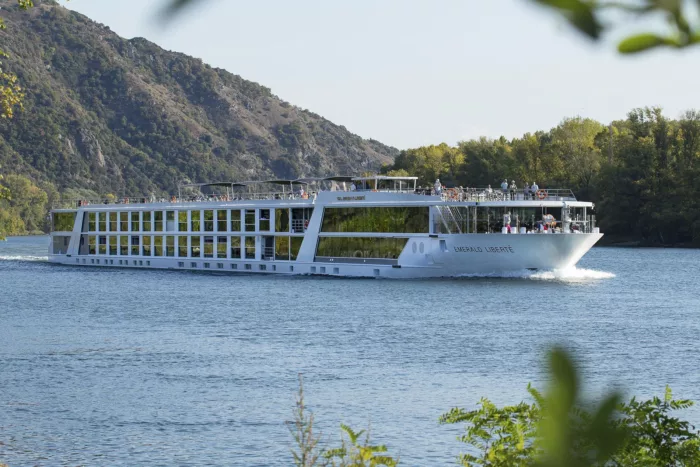
View moreA mainstay in our fleet since 2017, Emerald Liberté mirrors the charm of the French countryside as she sails the Rhône and Saône rivers.
Read more



Log in to continue


