




Day 1
![Zurich]()

Zurich

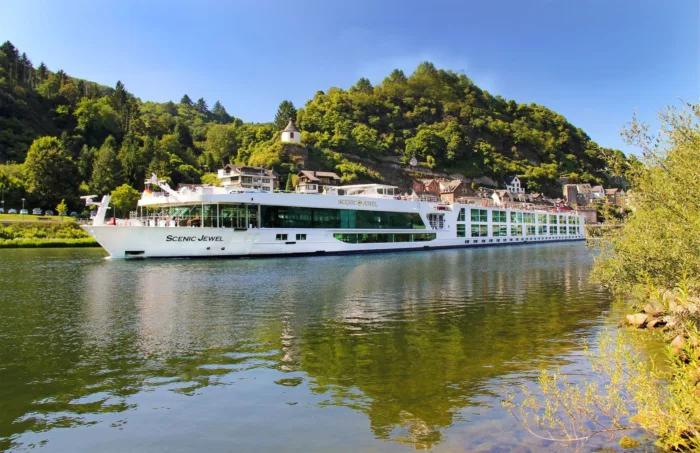
Scenic River Cruises is one of the most luxurious cruise operators in the world.
It’s the cruise line behind the innovative and super luxurious yacht-style ship Scenic Eclipse, a ship that revolutionised the cruise industry when it launched.
That same level of luxury can be had on its fleet of river ships.
The cruise line offers an all-inclusive experience, featuring amenities like spas, terraces, panorama lounges and spacious cabins with private butlers.
Read moreBasel is Switzerland’s gateway to the Rhine, combining medieval and modern charm. Its Old Town has narrow streets, Gothic spires and the impressive Basel Minster cathedral. With world-class art fairs and museums, including the Kunstmuseum and Fondation Beyeler, Basel is strong on culture. The city’s riverside promenade is lively in summer, with cafés and outdoor events.Basel is at the crossroads of Switzerland, France and Germany, making it a fascinating mix of influences, ideal for art and history lovers.
View moreBreisach is set on a hilltop, overlooking the Rhine and the vineyards of the Kaiserstuhl region. The town’s St Stephen’s Cathedral, with its striking tower, is a prominent landmark visible from the river.Breisach’s compact historic centre offers quiet streets, traditional wine taverns and small museums. The surrounding rolling vineyards produce some of Germany’s best white wines.
View moreStrasbourg is on the border of France and Germany, and its culture and architecture reflect a blend of both influences. The Grande Île, a UNESCO World Heritage site, is a maze of timber-framed houses, cobbled streets and canals often called “La Petite France”.The Strasbourg Cathedral, with its intricate pink sandstone façade and astronomical clock, dominates the skyline. Strasbourg also has a reputation as a European political centre, housing the European Parliament.
View moreIf you're looking to step into a fairytale, this is the right place. Perched on a dramatic bend in the Moselle, Cochem exudes storybook charm, crowned by the magnificent Reichsburg Castle – a visit here is an absolute must.
View moreOften called the 'Pearl of the Moselle', these twin towns straddle both sides of the river. Guests flock here for its medieval market square, the ruins of Landshut Castle and the surrounding vineyards, best explored on guided hikes or cycling tours.
View moreKoblenz occupies a strategic position where the Moselle River meets the Rhine, known as the Deutsches Eck (German Corner). The imposing Ehrenbreitstein Fortress overlooks the city, offering expansive views of the twin rivers and surrounding hills.The old town’s pedestrian streets have baroque churches, historic town halls and riverside promenades with cafés and markets. Visitors can take a cable car linking the Rhine to the Ehrenbreitstein Fortress for river and city views.
View moreDüsseldorf balances modernity and tradition. Known for its fashion industry and art scene, the city has a striking skyline along the Rhine, with sleek contemporary architecture. Yet the Altstadt (Old Town) contrasts with its narrow streets, historic churches and the lively ‘longest bar in the world’, a stretch of pubs famed for serving Altbier, the local brew.The Königsallee is the city’s luxury shopping boulevard with designer stores and elegant cafés shaded by chestnut trees. For a scenic walk or to watch the sunset over the water, check out the city’s riverfront promenades.
View moreDiscover one of Europe's greenest cities, often considered the gateway to Veluwezoom National Park. Arnhem makes an excellent base for an afternoon of countryside cycling, with scenic bike paths just beyond the city limits. History enthusiasts will also find plenty to explore, particularly the legacy of the 1944 Battle of Arnhem, which inspired the war epic A Bridge Too Far. The Netherlands Open Air Museum is also of interest, especially in summer, for those sailing with children in tow.
View moreBelgium's second city frequently features on Dutch Waterways cruises, and it's easy to see why. Often dubbed a 'capital of cool', Antwerp is an excellent stop for cultural exploration. Spend your day spotting Art Nouveau façades, hunting for treasures in the fashion district or visiting the open-air sculpture park Middelheim. And don't miss the library at the Museum Plantin-Moretus, a UNESCO-listed site that celebrates the city's printing legacy.
View moreThe French capital needs no introduction, but seeing it from the Seine offers a different perspective on the city. The river winds through the heart of Paris, its banks flanked by many of its most iconic sights, from Notre-Dame and the Eiffel Tower to the Louvre and the Musée d’Orsay.Most cruises start or end in Paris, allowing at least a full day to explore, at your own pace or on an organised excursion. Independent exploration is easy, with the metro, bateaux-mouches and a good pair of shoes all offering ways to see the city on your terms.The Left Bank brims with literary cafés, while the Right Bank has grand boulevards and elegant arcades. And while you shouldn’t miss the city’s big hitters, from the Arc de Triomphe to the Jardin du Luxembourg, don’t hesitate to adventure beyond the headliners, whether you want to browse the shelves at English-language bookshop Shakespeare and Company, sip coffee at Les Deux Magots or take in the view from Montmartre.
View moreAmsterdam is the Netherlands’ lively capital, famous for its historic canals and art museums. Cruising into the city reveals a network of waterways lined with tall, narrow houses with ornate gables, a hallmark of Dutch Golden Age architecture. The city’s past as a busy trading city can be seen in its harbour and historic buildings.Exploring on foot or by bike, visitors can check out world-class museums such as the Van Gogh Museum and the Rijksmuseum, alongside the poignant Anne Frank House. The city’s compact centre makes it easy to wander through charming neighbourhoods like Jordaan with its boutique shops, cafés and galleries.Despite its popularity, Amsterdam maintains a relaxed vibe with leafy canals and parks offering a peaceful break from the busy centre.
View moreSet beneath chalky cliffs on a bend in the Seine, Les Andelys is one of the most picturesque stops on the river. This small Normandy town is best known for the dramatic ruins of Château Gaillard, built for Richard the Lionheart in the 12th century to defend his duchy. From its perch, the fortress offers panoramic views over the Seine Valley.Les Andelys is actually two towns in one: the upper town, where the castle sits and the lower riverside town with its medieval streets, traditional houses and Gothic church. Walking paths connect the two, winding past chalk cliffs and apple orchards typical of the region.Les Andelys is compact enough to explore on foot, and many cruises allow time to hike up to the castle or enjoy a wander along the riverbank.
View moreRouen is one of the prettiest cities along the Seine, with its half-timbered houses, cobbled streets and soaring Gothic churches. Once one of the largest and wealthiest cities in medieval Europe, Rouen is best known as the place where Joan of Arc was tried and executed in 1431.Visitors can explore the Historial Jeanne d’Arc, an immersive museum housed in the former archbishop’s palace or visit the modern church that marks the site of her execution. Rouen Cathedral, famously painted by Monet, dominates the skyline with its intricate façade and towering spire.The city’s size makes it perfect to explore on foot, and it is a favourite stop of cruisers in medieval history or Impressionist art.
View moreHonfleur is one of Normandy’s most charming ports, often topping the list of favourite stops on Seine cruises. Set on the estuary where the Seine meets the Channel, Honfleur’s appeal lies in its narrow cobbled streets, slate-fronted houses and historic harbour.The Vieux Bassin, or Old Dock, is the heart of Honfleur, with its tall, narrow buildings and the cafés and galleries that line the quay. Nearby, the Church of Sainte-Catherine, built in the 15th century, is one of France’s few remaining wooden churches.Honfleur’s artistic heritage is another draw. Painters, including Monet and Boudin, were inspired by the town.
View moreSet on a bend of the Seine, Caudebec-en-Caux is a quiet Normandy town and a common base for excursions into the surrounding region, but the town itself has historic charm, particularly in the Gothic Church of Notre-Dame, with its complex stonework and stained glass.In Caudebec’s centre, you’ll find some timber-framed houses and remnants of medieval fortifications. There’s also a riverfront promenade and a small museum dedicated to local history and traditions.Many cruise lines use Caudebec as a launch point for excursions to the Abbey Route, taking in magnificent monastic sites like Jumièges and Saint-Wandrille, or further afield to Étretat’s cliffs or the D-Day beaches.
View moreHonfleur is one of Normandy’s most charming ports, often topping the list of favourite stops on Seine cruises. Set on the estuary where the Seine meets the Channel, Honfleur’s appeal lies in its narrow cobbled streets, slate-fronted houses and historic harbour.The Vieux Bassin, or Old Dock, is the heart of Honfleur, with its tall, narrow buildings and the cafés and galleries that line the quay. Nearby, the Church of Sainte-Catherine, built in the 15th century, is one of France’s few remaining wooden churches.Honfleur’s artistic heritage is another draw. Painters, including Monet and Boudin, were inspired by the town.
View moreVernon is a small, picturesque town on the Seine known for its half-timbered houses, historic stone bridges, cobbled streets and lively market atmosphere.Vernon is the gateway to Giverny, just a short drive away, where you'll find Claude Monet’s famous gardens and home. Many river cruises include guided excursions to Giverny, allowing visitors to see the water lilies and vibrant flower beds that inspired Monet’s masterpieces.The town itself has charming cafés and bakeries lining the main square, plus a 12th-century church, Saint-Maclou, with distinctive Norman architecture.
View moreAt the confluence of the Seine and the Oise, Conflans-Sainte-Honorine has long been a hub for river life. Often called the capital of France’s inland waterways, it has a deep connection to barge culture. Many of the boats moored along its banks are still home to families, and the riverside promenade is lined with old péniches (barges), some converted into museums or chapels.We recommend a visit to the Musée de la Batellerie, housed in a grand château, which tells the story of French river navigation. From Conflans, cruise excursions often head to nearby places of interest, including the Palace at Versailles or the village of Auvers-sur-Oise, where Van Gogh spent his final days.
View moreThe French capital needs no introduction, but seeing it from the Seine offers a different perspective on the city. The river winds through the heart of Paris, its banks flanked by many of its most iconic sights, from Notre-Dame and the Eiffel Tower to the Louvre and the Musée d’Orsay.Most cruises start or end in Paris, allowing at least a full day to explore, at your own pace or on an organised excursion. Independent exploration is easy, with the metro, bateaux-mouches and a good pair of shoes all offering ways to see the city on your terms.The Left Bank brims with literary cafés, while the Right Bank has grand boulevards and elegant arcades. And while you shouldn’t miss the city’s big hitters, from the Arc de Triomphe to the Jardin du Luxembourg, don’t hesitate to adventure beyond the headliners, whether you want to browse the shelves at English-language bookshop Shakespeare and Company, sip coffee at Les Deux Magots or take in the view from Montmartre.
View moreExplore Europe on board the Scenic Ruby or Scenic Pearl and enjoy stunning views from the Sun Deck, exclusive dining and a choice between five spacious suite categories.
Immaculately designed and luxuriously appointed, glide along the Rhine, Main, Danube & Moselle Rivers on board these spectacular ships.
Read more



Log in to continue


